Use the free conversion rate calculator below to work out the conversion rate of any ad campaign or landing page. Enter your total number of clicks and your total number of conversions, and the calculator does the rest.
What Conversion Rate Tells You
Conversion rate is one of the clearest signals of whether your advertising is actually working. It tells you how many of the clicks on your ads or website are turning into the action you care about — a purchase, a signup, a form fill, a phone call.
A high conversion rate generally means your targeting is well matched to your offer: the people arriving on the page are the people the page was built for. A low conversion rate points to a mismatch somewhere — often the audience targeting, but just as often the landing page, the offer itself, or the gap between what the ad promised and what the page delivers.
Conversion Rate Formula
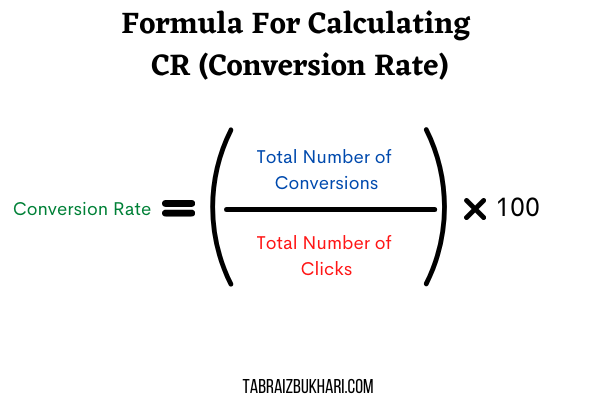
You need two numbers: total clicks and total conversions. Divide conversions by clicks, then multiply by 100. Conversion rate is simply the percentage of visitors who complete your goal.
A Worked Example
Say a search campaign delivered 2,400 clicks last month and generated 84 leads through your contact form. Divide 84 by 2,400 and you get 0.035. Multiply by 100 and your conversion rate is 3.5%.
On its own that number means very little. It becomes useful when you compare it against something — last month’s rate, a different ad group, a different landing page, or a benchmark for your industry.
What Counts as a Good Conversion Rate?
There’s no single answer, because it depends heavily on your industry, your traffic source, and what you’re counting as a conversion. A newsletter signup will convert far more often than a $3,000 purchase. As a rough orientation:
- Ecommerce tends to sit in the low single digits — anything above 2–3% is generally healthy.
- Lead generation (forms, quote requests) often runs higher, frequently in the 5–10% range.
- High-value B2B or long sales cycles can perform well below 1% and still be profitable, because a single conversion is worth so much.
Treat these as orientation, not targets. Your own historical performance is a far more useful benchmark than an industry average, since it accounts for your offer, your pricing, and your market.
How to Improve a Low Conversion Rate
- Check message match. The headline on your landing page should echo the promise in your ad. A disconnect here loses people in the first three seconds.
- Tighten your targeting. Review search terms reports and negative keywords. Cheap, irrelevant clicks quietly drag your rate down.
- Reduce friction. Every extra form field costs you conversions. Ask only for what you genuinely need at this stage.
- Fix page speed. Slow-loading landing pages lose visitors before they ever see the offer.
- Segment before you judge. A mediocre overall rate often hides one strong segment and one poor one. Break results down by device, location, and ad group.
Frequently Asked Questions
Should I measure conversion rate by clicks or by impressions?
By clicks. Conversion rate measures how well your page persuades the people who actually arrived. Measuring against impressions blends in click-through rate and makes it harder to tell which part of the funnel is underperforming.
Why does Google Ads show a different conversion rate than my analytics?
The two platforms use different attribution models and different conversion windows, so some difference is normal. Pick one source as your reporting standard and stay consistent rather than trying to reconcile them exactly.
How much data do I need before the number is trustworthy?
With only a handful of conversions, the rate swings wildly on random variation. As a practical rule, wait for at least 30–50 conversions before drawing conclusions or making significant budget decisions.
Related Calculator
Once you know your conversion rate, the natural next question is what each of those conversions is costing you. Use my CPA calculator to work out your cost per acquisition.